The U.S. National Science Foundation has renewed the National Science Foundation Artificial Intelligence Institute for Adult Learning and Online Education (NSF AI-ALOE) through 2031 with a $18.4 million research award.
Led by Ashok Goel, a professor in Georgia Tech's School of Interactive Computing AI-ALOE brings together researchers, educators and partners to explore how AI can support skilling, reskilling, and upskilling throughout adult education. The renewal builds on five years of research in Phase I that has already reached more than 50,000 learners through eight AI-powered learning technologies deployed across more than 500 courses in multiple educational settings, including the Technical College System of Georgia.
The renewal (Phase II) will continue expanding AI-ALOE's research agenda to address one of the defining challenges of the AI era: helping learners continuously adapt as technologies, industries and workforce needs evolve.
Empowered Learning Through Adaptive Expertise
This second phase will focus on adaptive expertise, or the ability to adapt and transfer learned skills to new situations. Rather than preparing learners for only one task or role, the Institute aims to help adults build the flexibility to respond to changing technologies and careers.
"At a time when AI is reshaping how people learn and work, AI-ALOE is determined to advance AI for reskilling and upskilling in technical education as well as workplace training," said Goel.
To support this goal, AI-ALOE will develop AI-powered learning tools designed to help students build and apply complex skills in both educational and workplace settings. By working with students and instructors, AI-ALOE will create learning experiences that are personalized, adaptive and effective for a wide range of learners.
Advancing AI-Augmented Learning
Using the Architecture for AI-Augmented Learning (A4L), a data architecture developed during the Institute's first phase, AI-ALOE will gather and analyze information from AI tools, learning management systems and student information systems. These insights will help researchers better understand how people learn and inform the design of future AI-powered learning experiences.
The Institute will advance research on AI-supported learning in four key areas: scalability, personalization, transfer of learning, and whole-person learning. Together, these efforts will help researchers explore how AI can expand access to education, tailor learning experiences to individual needs and support lifelong learning in a rapidly changing world.
The Community Behind AI-ALOE
AI-ALOE's success has been built on the contributions of researchers, educators and partner organizations working together to explore new approaches to AI-powered learning. The Institute's renewal reflects the impact of its first five years of research and the strength of the collaborative community advancing its mission.
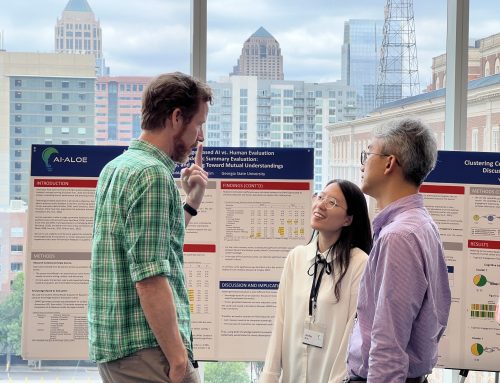
"This renewal means a great deal to us. We were fortunate to be part of the AI-ALOE team in its first five years," said Min Kyu Kim, co-principal investigator at Georgia State University. "We hope to help lead the way toward advancing human intelligence through AI for adaptive expertise development."
"AI is transforming how adults learn and work, and the skills needed to succeed in work are changing more rapidly than ever," said Christopher MacLellan, co-principal investigator at Georgia Tech.
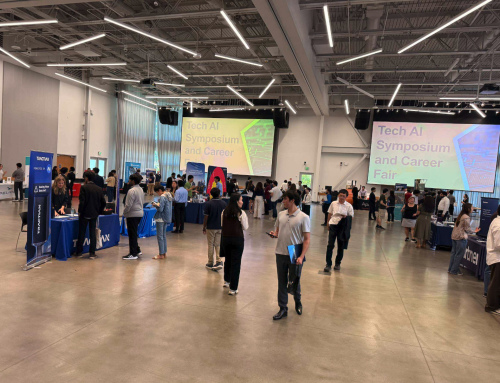
The institute's network continues to grow through collaborations with higher education institutions, workforce development organizations and industry partners, creating new opportunities to expand the reach and impact of AI-powered learning technologies. Through these partnerships, AI-ALOE expects to reach as many as 370,000 learners nationwide through skilling, reskilling and upskilling initiatives over Phase I and Phase II of the Institute.
"Researchers at Digital Promise are excited to join AI-ALOE as it moves into its next phase and tackles the challenge of developing AI tools and implementation models for fostering adaptive expertise," said Barbara Means, co-principal investigator at Digital Promise Global. "AI-ALOE's work will be grounded in learning theory and focused on needs experienced by learners, educators and employers in specific fields."
About The Partners
AI-ALOE is headquartered at Georgia Tech. Its research partners in Phase II include Columbia University, Cornell University, Georgia State University, University of California at Irvine, and Digital Promise; educational partners include Metropolitan State University, National University, Technical College System of Georgia, and University of Central Florida; and industrial partners include Centennial Bolt, Dolby, Georgia Pacific, Instructure, Intel, Xebia, Wiley, as well as Colorado Advanced Manufacturing Association, Georgia's Manufacturing Extension Program, and Georgia Tech's AI Manufacturing Facility.