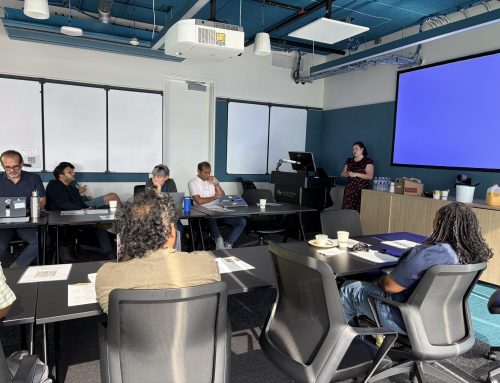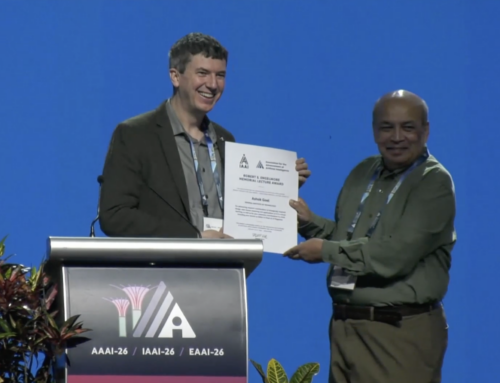
Xiaoming Zhai, Associate Professor at the University of Georgia and Director of the AI4STEM Education Center, presented on the role of artificial intelligence in advancing science education aligned with the Next Generation Science Standards (NGSS). Zhai highlighted how AI technologies, including natural language processing, computer vision, and generative AI, can support assessment of complex student learning outcomes such as modeling, argumentation, and scientific explanation.
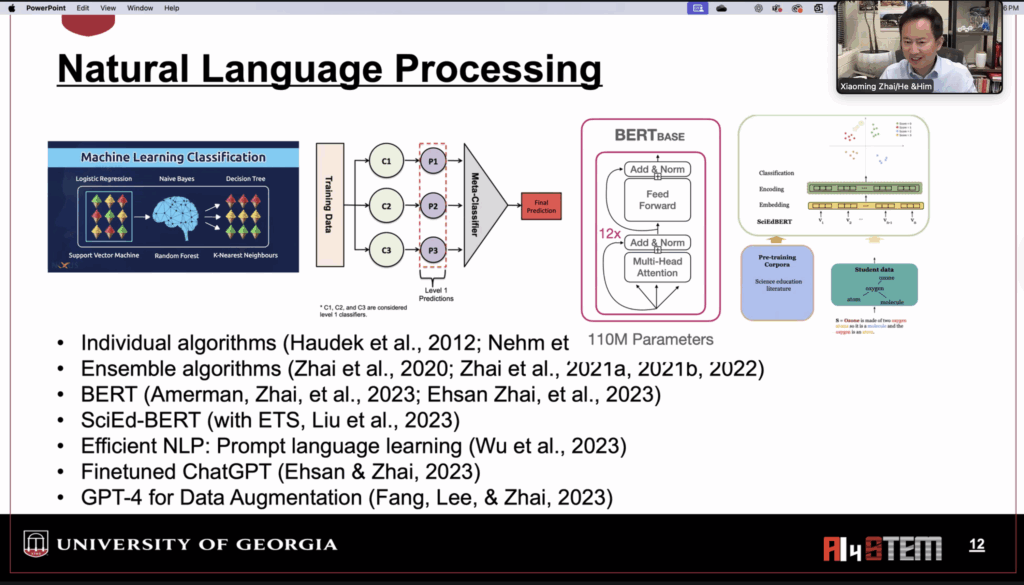
The talk showcased innovations like fine tuned language models for automatic scoring, computer vision tools for analyzing student drawings, and human-centered dashboards with automatically generated reports to guide teachers’ instructional decisions. Empirical findings underscored the accuracy, fairness, and scalability of these AI-supported approaches.
Zhai also addressed misconceptions about AI bias, discussed ethical implications, and emphasized the importance of teacher agency and pedagogical scaffolding in AI-integrated classrooms. He concluded with a call for thoughtful adoption of AI to foster personalized, equitable, and rigorous learning experiences in K-12 science education.
Watch the webinar here.