About Sanaz
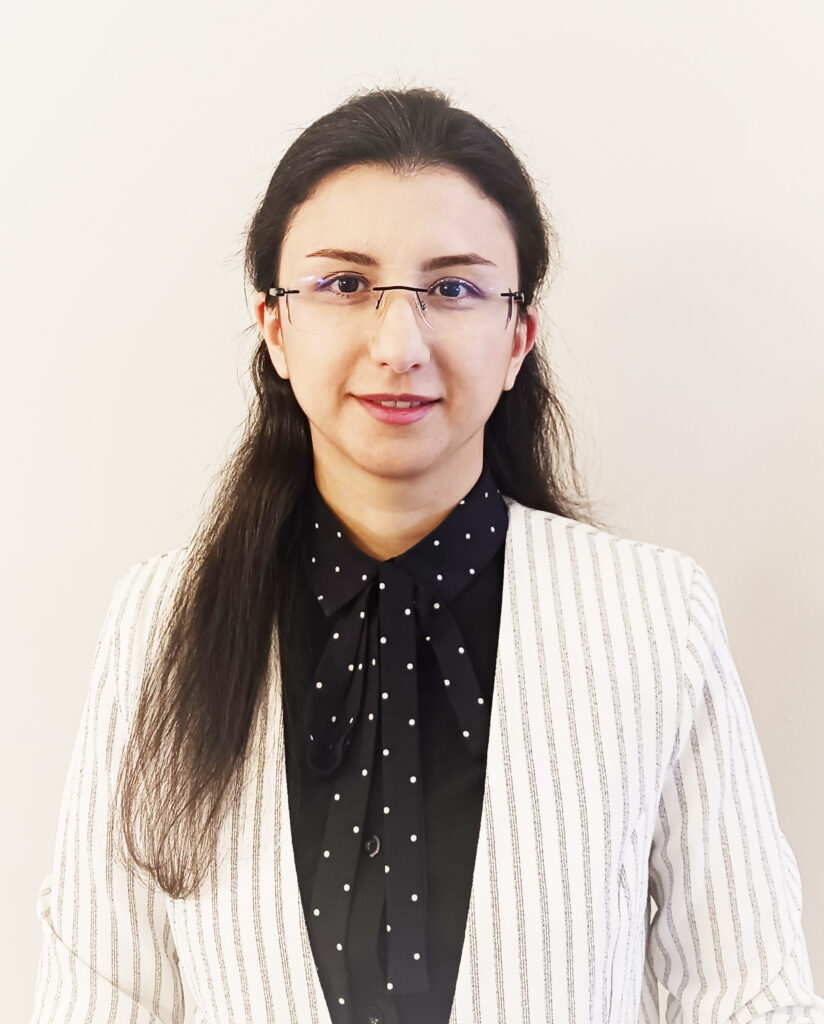
My name is Sanaz. I am a fourth-year PhD student in Computational Design at Georgia Tech, and I work as a graduate research assistant at AI-ALOE with Michael Hoffmann.
My current research interest explores the integration of generative AI tools in computational design pedagogy to investigate effective practices for leveraging AI technologies while considering opportunities and challenges presented in graduate-level education.
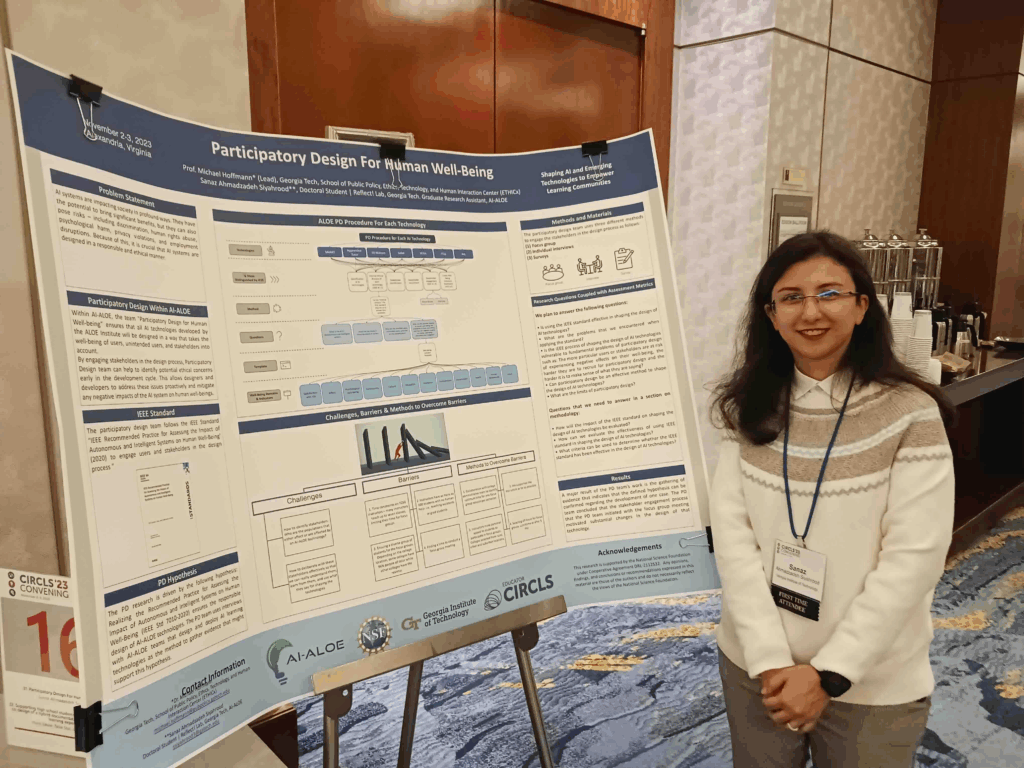
Also, for the upcoming academic year of 2025-2026, I will serve in the Graduate Student Government Association (GSGA) Academic and Research Affairs Committee of Georgia Tech. This committee aims to define and update academic standards for graduate students through various efforts, establishing the graduate student position on the use of large language models (like ChatGPT) in classroom and research settings.
Sanaz’s Journey With AI-ALOE
Before joining Georgia Tech, I earned a Master of Science in computational design from the School of Design at the University of North Carolina at Charlotte (UNCC) and a Master of Science in information technology with a concentration in human-centered design from the Department of Software Information Systems in the College of Computing and Informatics at UNCC.
During my studies at UNCC, I gained firsthand experience in systematically identifying the specific needs of users and stakeholders and incorporating them into user-friendly and dynamic solutions, both in my class projects and my work as a research assistant. I have always been interested in understanding the evolving relationship and delicate alignment between human needs and technological possibilities. In AI-ALOE, I have applied user research methods to translate user needs into design solutions. As a graduate researcher, I contribute to a team effort to build a bridge between the AI systems developed at the institute and the humans they are designed to serve. This experience taught me the invaluable skills of participatory design and stakeholder engagement, showing me how to bring diverse voices into the technology design process.
The goal of our team, “User-Engaged Design,” is to shape the design of all AI technologies that AI-ALOE develops based on the procedure described in a standard created by the world’s largest engineering society, Institute of Electrical and Electronics Engineers (IEEE), for creating ethically responsible AI technologies. This standard primarily focuses on the well-being of users and stakeholders of AI tools. The methodology provided in this standard is iterative and has an adaptive nature, and it can effectively capture the pain points in the design of AI tools, allowing designers and developers to address the issues proactively and mitigate any negative impacts of the AI system on human well-being.
In this line, my key responsibilities within the team include several main activities. On the research side, I have a responsibility to review literature related to our methodology and contribute to publications and presentations for various venues. On the data analysis side, we conduct studies—primarily through focus group meetings—to gather insights from users and stakeholders on the potential positive and negative effects of AI tools on their well-being. We also do qualitative and quantitative analyses on the collected data and prepare comprehensive reports for each AI tool based on our findings. Our team shares these insights with the Technology teams to shape the design and development of AI tools. Our work requires close collaboration with technology developers and team members from other groups.
Outside the Office
Spending time in nature always makes me happy and relaxed. I enjoy gardening, and I love hiking and camping in all seasons, as each season has its own beauty. I also enjoy designing and creating decorative objects for interior spaces, and have a passion for decorating cakes.
Words of Inspiration
One guiding principle I live by is: “Leave things better than you found them.”
Whether it is a team, a project, or a simple task, I believe in contributing with intention and integrity. This mindset has shaped the way I thought, led, collaborated, and solved problems. It reminds me that small, consistent actions can build a lasting impact—and that true success is measured by the positive difference we make in the lives of others and the world we shape around us.
Also, no matter how much experience I gain, I keep a learner’s mindset. It’s helped me stay curious, open to feedback, and committed to growth. I have found that this humility not only improves my skills but also builds strong foundations to develop different skillsets.